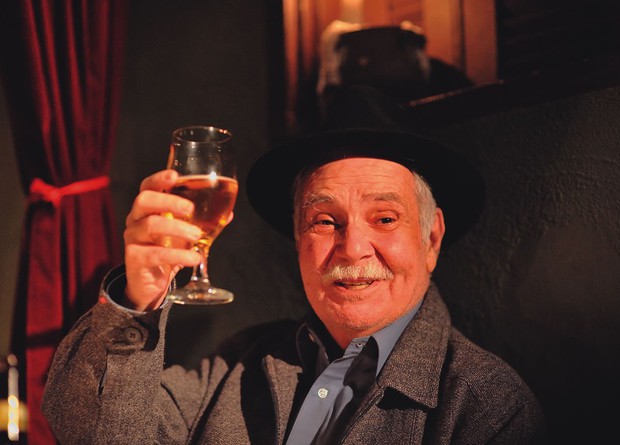
"Longe De Casa": Paulo Vanzolini's Poignant Ode to São Paulo Saudade
Paulo Vanzolini, a name synonymous with both profound scientific inquiry and exquisite musical artistry, gifted Brazil with an enduring masterpiece that perfectly encapsulates the unique longing for his beloved hometown:
"Longe De Casa". This iconic samba-choro, whose title translates to "Far From Home," transcends mere homesickness, delving into the deep well of *saudade* – a Portuguese word that imperfectly translates to a melancholic longing for something or someone absent. Vanzolini, a renowned zoologist by profession, possessed a rare talent for distilling complex emotions into simple, evocative verses, making
"Longe De Casa" a timeless anthem for anyone who has ever yearned for the comfort and familiarity of their roots. His dual life, straddling the meticulous world of science and the passionate realm of music, lends an extraordinary depth to his compositions, none more so than this heartfelt lament for São Paulo.
The Soulful Cry of "Longe De Casa": Lyrics and Emotion
The essence of
"Longe De Casa" is found in its raw, unfiltered expression of despair when separated from one's cherished land. The opening lines immediately set a somber tone: "Far from home, I cry and want nothing / Because off his land, no one wants nor can do anything." This isn't just a physical distance; it's an emotional paralysis, a complete loss of will. Vanzolini, through his character, paints a vivid picture of what he misses most about São Paulo. It’s not grand monuments or bustling avenues, but the subtle, intimate details: "I miss São Paulo, miss hearing, in the wee hours, low guitar strings / And a flute crying its *choro* notes like silver." This imagery transports the listener to a quiet, introspective moment, where the soulful sounds of Brazilian music become a balm and a reminder of home. The *choro*, a distinctly Brazilian instrumental music genre known for its virtuosic melodies and improvisational flair, is personified as "crying," amplifying the feeling of yearning.
But perhaps the most striking lines in
"Longe De Casa" are those that differentiate its particular brand of pain: "Pain from love doesn’t wound me / This longing for the drizzle is what kills me." Here, Vanzolini makes a powerful statement. Unlike the common pangs of romantic heartache, it is the profound, existential ache for São Paulo – specifically its characteristic *garoa* (drizzle) – that truly cuts deep. São Paulo is famously known as *a cidade da garoa*, the city of drizzle, and this meteorological phenomenon becomes a metaphor for the city's very soul. The song continues to explore this emotional landscape as the narrator goes "out on the street, whistling intently / An impassioned samba, that Silvio Caldas might sing." Silvio Caldas was one of Brazil’s most celebrated singers of the 1930s and 40s, known for his emotive interpretations, grounding the song in a rich musical heritage. Yet, this show of outward bravado quickly crumbles: "And I pretend the drizzle comes to wet my face / But it’s tears, and I cry so much." The pretense of the drizzle masking tears is a heart-wrenching moment of vulnerability, revealing the depth of the narrator's sorrow. The concluding lines echo the opening, reinforcing the cyclical nature of this profound longing: "How I wish I could return today to that land that I love / Because far from home, I cry, and want nothing." This lyrical journey captures the universal experience of homesickness, yet grounds it uniquely in the Paulista identity.
Vanzolini's Paradoxical Genius: Scientist and Sambista
Paulo Vanzolini's life story is as fascinating and unique as his music. Born in São Paulo on April 25, 1924, he spent his formative years immersed in the city's culture, undoubtedly absorbing the sounds and sentiments that would later infuse his compositions. His father, Carlos Alberto, was an engineering professor at the University of São Paulo, setting a precedent for academic rigor in the family. However, Vanzolini's path to his chosen field was rather circuitous. Encouraged by his father's medical school colleagues, he initially pursued a medical degree, completing it in 1947. Yet, his true passion lay elsewhere: zoology. This led him to Harvard, where he pursued his PhD, gaining world-class scientific training.
Despite his academic prowess, Vanzolini always preferred the practical, hands-on work of the field. For decades, he dedicated himself to collecting reptiles and amphibians for the University of São Paulo’s Museum of Zoology, where he served as director from 1963 to 1993. This demanding scientific career, filled with expeditions and meticulous research, stands in stark contrast to his poetic output, making his musical genius all the more remarkable. He was a scientist of international renown, yet simultaneously a profound and sensitive poet and composer. His ability to seamlessly inhabit these two seemingly disparate worlds is a testament to his multifaceted intellect and emotional depth. While his body of musical work, with fewer than fifty recorded songs, is relatively small, its impact is immense. He is rightly regarded, alongside Adoniran Barbosa, as one of São Paulo's greatest *sambistas*, demonstrating that quality truly triumphs over quantity. To delve deeper into his fascinating professional life, read
Paulo Vanzolini: The Zoologist Who Penned São Paulo: Beloved Sambas.
São Paulo: The Muse Behind the Melodies
São Paulo isn't just the setting for
"Longe De Casa"; it is its very heart and soul. Vanzolini’s deep connection to the city he grew up in is evident in every line. The reference to *a cidade da garoa* – the city of drizzle – is more than just a meteorological description; it's an embrace of São Paulo's unique climate and atmosphere. Unlike the sun-drenched beaches often associated with Brazilian stereotypes, São Paulo, with its occasional melancholic drizzle, evokes a different kind of beauty and a particular contemplative mood. This element becomes a character in itself, embodying the city's spirit and the narrator's tears.
The *choro* music mentioned in the song further roots it in Brazilian cultural identity. While Vanzolini is known for samba, the inclusion of *choro* – with its typically complex melodies and improvisational nature, often featuring instruments like flute, clarinet, and mandolin – speaks to a broader musical appreciation and a deeper connection to traditional Brazilian sounds. It's the music that defines the *wee hours* he misses, contributing to the city's nocturnal soundtrack. Vanzolini captures a distinct Paulista sentiment, one that celebrates the city's vibrant, yet sometimes introspective, character. His work stands as a testament to São Paulo's rich cultural life, proving that the city's contributions to Brazilian music are as significant and emotionally resonant as those from Rio de Janeiro or Bahia. Even in his later years, Vanzolini maintained his connection to the musical scene, playing occasional shows around São Paulo, often accompanied by his companion, Ana Bernardo, who helped bring his timeless stories and melodies to new audiences.
The Enduring Legacy of "Longe De Casa": Why It Resonates
The powerful resonance of
"Longe De Casa" stems from its universal appeal, expertly clothed in specific cultural details. While the song is deeply rooted in Vanzolini's personal experience of *saudade* for São Paulo, the feeling of longing for home, for the familiar, for a place that shaped who you are, is a sentiment shared across cultures and generations. Vanzolini's genius lies in his ability to articulate this profound emotion with such raw honesty and poetic grace.
The song’s timeless quality ensures its continued relevance. It has been interpreted by numerous artists over the years, each bringing their own voice to Vanzolini’s enduring lyrics, demonstrating its adaptability and strength. Dona Inah's rendition, for instance, mentioned in some contexts, provides a good audio example of the song's enduring power.
"Longe De Casa" doesn't just chronicle a personal feeling; it taps into a collective unconscious, reminding listeners of their own connections to place and memory. It stands as a beacon of Brazilian musical heritage, a reminder that the most profound art often emerges from the most deeply felt human experiences. To fully appreciate the intricate cultural layers of this masterpiece, explore
Unpacking "Longe De Casa": Vanzolini's Brazilian Choro & Drizzle. When listening, pay attention to how different artists emphasize the melancholic flute, the yearning guitar, or the raw emotion in the vocals – each interpretation offers a new facet of Vanzolini's genius.
Conclusion
Paulo Vanzolini’s
"Longe De Casa" is far more than just a song; it is a lyrical monument to *saudade*, a deeply personal and culturally specific expression of homesickness for São Paulo. Through evocative imagery of low guitar strings, crying *choro* flutes, and the city’s iconic drizzle, Vanzolini crafted a timeless narrative of yearning. His remarkable life, split between the rigorous demands of zoological research and the passionate world of samba, underscores the extraordinary depth and sensitivity embedded in his music.
"Longe De Casa" continues to resonate because it speaks to the universal human condition of longing for roots, reminding us that home is not merely a place, but a complex tapestry of sounds, sights, and emotions that forever shape our identity.