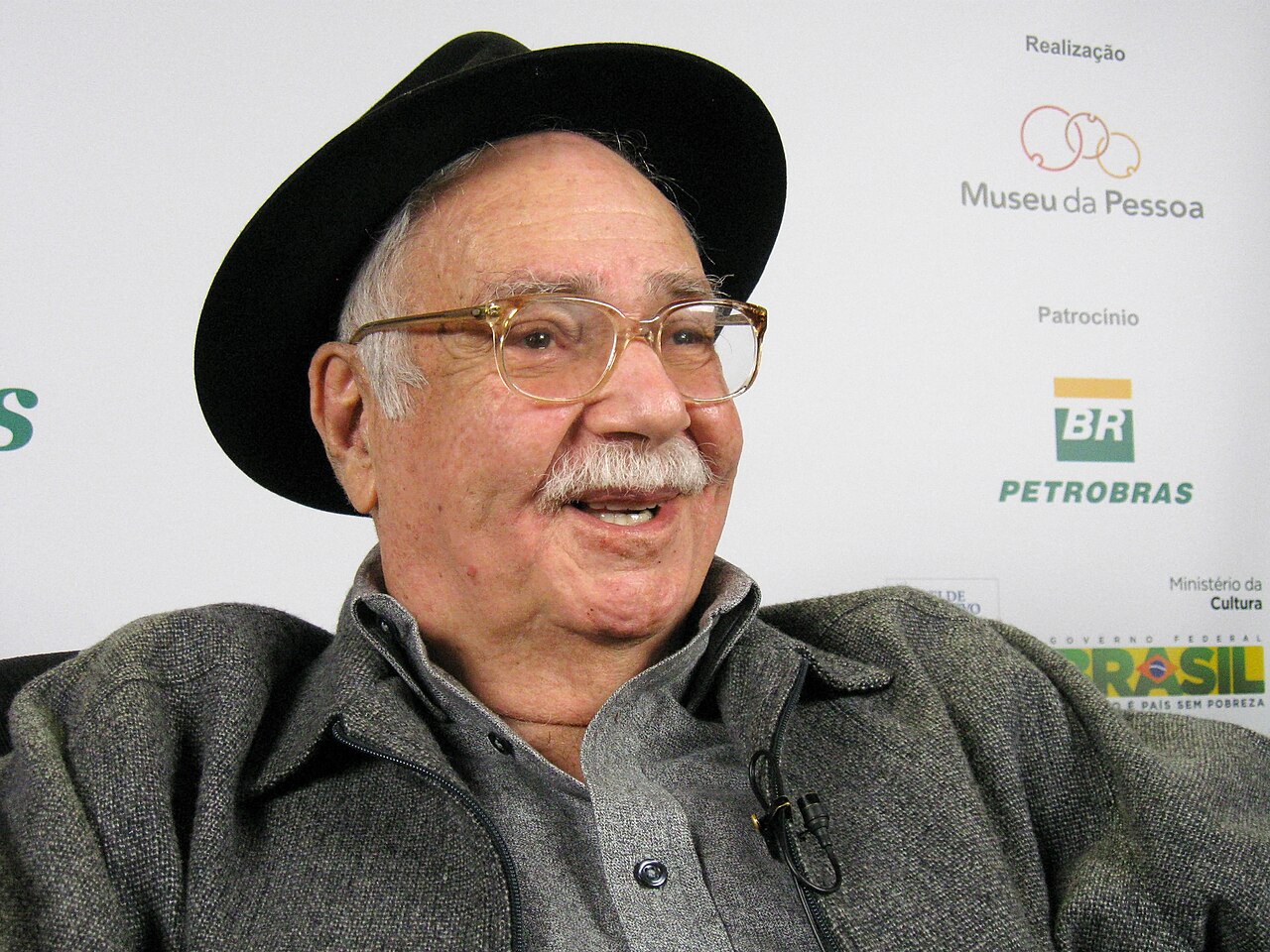
Paulo Vanzolini: A Duality of Brilliance
In the vibrant tapestry of Brazilian culture, certain figures stand out not just for their talent, but for the remarkable breadth of their genius. Paulo Vanzolini, born April 25, 1924, is one such luminary. Revered globally as a distinguished zoologist, particularly for his groundbreaking work with reptiles and amphibians, his scientific legacy alone would be enough to secure his place in history. Yet, for many Brazilians, Vanzolini is equally, if not more, cherished as the profound lyricist and composer behind some of São Paulo's most enduring and beloved sambas. It's a duality that often leaves newcomers perplexed: how could a meticulous scientist, at home in the field, also be the heart and soul behind such poignant and passionate musical expressions? This article delves into the extraordinary life of Paulo Vanzolini, exploring the intricate connection between his scientific mind and his artistic spirit, with a special focus on the timeless melody of "Longe De Casa".
Vanzolini’s story is a testament to the idea that passion knows no singular discipline. His life seamlessly wove together the rigorous demands of scientific inquiry with the lyrical soul of a poet, proving that observation and understanding can manifest in both taxonomical precision and heart-rending verse. His work, whether dissecting a specimen or crafting a melody like "Longe De Casa", always reflected a deep love and meticulous study of the world around him.
The Unexpected Polymath: From Herpetology to Heartbreak
Paulo Vanzolini's journey began in São Paulo, where he spent his formative years immersed in a vibrant intellectual atmosphere. His father, Carlos Alberto, was an engineering professor at the prestigious University of São Paulo (USP), undoubtedly fostering an environment of curiosity and academic pursuit. Though his ultimate passion lay in zoology, a practical suggestion from his father's medical school colleagues led him to first pursue a medical degree, which he completed in 1947. This foundational training in medicine, with its emphasis on detailed observation and systematic classification, would later prove invaluable to his scientific career.
Following his marriage in 1948, Vanzolini's academic path took him across continents. In 1949, he journeyed to Cambridge, Massachusetts, to embark on his PhD studies at Harvard University, specializing in zoology. It was here that his dedication to field research truly blossomed. For decades, Vanzolini's life was defined by expeditions, tirelessly collecting reptiles and amphibians for the University of São Paulo's Museum of Zoology. His commitment to direct observation and hands-on investigation was profound, a characteristic he carried throughout his tenure as the museum's director from 1963 to 1993. His contributions to herpetology, particularly in the study of South American reptiles, are monumental, marking him as a giant in his scientific field.
Yet, amidst the academic rigors and countless hours spent in the Brazilian wilderness, an equally powerful creative current flowed through Vanzolini. Despite a relatively small body of musical work—fewer than fifty songs recorded throughout his lifetime—his compositions resonate with a raw honesty and profound insight that have cemented his status as one of São Paulo's greatest sambistas, often mentioned in the same breath as the legendary Adoniran Barbosa. This unique blend of scientific precision and poetic sensibility is what makes Vanzolini's artistic output so utterly captivating.
Longe De Casa: A Poetic Tapestry of Longing
Perhaps no song encapsulates Paulo Vanzolini's emotional depth and lyrical brilliance better than "Longe De Casa" (Far From Home). Co-written with Eduardo Gudin, this poignant samba is a quintessential expression of saudade—a Portuguese word for a deep emotional state of melancholic longing or nostalgia for something or someone that is absent, which often carries a complex awareness that the object of longing might never return. The lyrics paint a vivid picture of a man consumed by homesickness, specifically for his beloved São Paulo:
"Far from home, I cry and want nothing
Because off his land, no one wants nor can do anything
I miss São Paulo, miss hearing, in the wee hours, low guitar strings
And a flute crying its choro notes like silver"
These opening lines immediately transport the listener into Vanzolini's world of heartfelt longing. The specific cultural references within "Longe De Casa" are a masterclass in evocative storytelling:
- A Cidade da Garoa: The City of Drizzle: Vanzolini keenly evokes São Paulo's unique atmospheric charm, referring to it as "a cidade da garoa"—the city of drizzle. This soft, persistent rain is not just a meteorological phenomenon; it's an intrinsic part of the city's identity, symbolizing its often melancholic yet resilient spirit. The drizzle in the song becomes a metaphor for his own tears: "And I pretend the drizzle comes to wet my face / But it’s tears, and I cry so much." This beautiful personification highlights the depth of his emotional pain.
- The Cry of the Choro: The mention of "a flute crying its choro notes like silver" is a tribute to choro, one of Brazil's earliest and most intricate popular musical styles. Characterized by its rapid, virtuosic melodies and often melancholic harmonies, choro instruments like the flute are known for their expressive, almost tearful quality. It's the sound of São Paulo's soul, deeply missed when away.
- Silvio Caldas: The Voice of Longing: Vanzolini also makes reference to Silvio Caldas, one of Brazil's most celebrated singers, whose golden era spanned the 1930s and 1940s. Caldas was renowned for his expressive interpretations of sambas and romantic songs, often imbued with a sense of drama and profound emotion. By whistling "An impassioned samba, that Silvio Caldas might sing," Vanzolini not only pays homage to a musical idol but also aligns his own feeling of saudade with the powerful emotional delivery Caldas was known for.
The song is a masterclass in how personal experience can transcend into universal emotion. While Vanzolini wrote "Longe De Casa" from his own perspective, particularly during his time studying at Harvard, its theme of yearning for home resonates with anyone who has ever felt the ache of separation. It's a reminder that true art often stems from deeply felt personal truths.
Tips for Appreciating Vanzolini's Lyrical Nuances:
- Listen Actively: Pay attention to the storytelling. Vanzolini's lyrics are rich with imagery and specific cultural references that paint a complete picture.
- Explore Translations: Even if you understand Portuguese, exploring different translations can offer new insights into the nuances and poetic choices.
- Contextualize: Understanding the cultural significance of São Paulo's "drizzle," the expressive nature of choro, and the stature of figures like Silvio Caldas enriches the listening experience immensely.
- Embrace Saudade: Allow yourself to feel the unique melancholic longing that saudade represents. It's a fundamental key to understanding much of Brazilian music, and particularly "Longe De Casa".
An Enduring Legacy: Why Vanzolini's Small Catalog Resonates So Deeply
Despite his relatively modest output of recorded songs, Paulo Vanzolini's impact on Brazilian music is immense. He is rightly regarded alongside Adoniran Barbosa as one of São Paulo's greatest sambistas. This esteem comes not from quantity, but from the unparalleled quality and authenticity of his work. Each song is a meticulously crafted gem, imbued with a sharp wit, observational detail, and a profound understanding of the human condition, particularly as experienced through the lens of São Paulo life.
Vanzolini’s sambas often explore themes of longing, love, betrayal, and the daily struggles and joys of the working class, all delivered with an elegant poeticism that belies their often melancholic undertones. His scientific training, far from being a distraction, seemed to lend a unique precision to his lyrical observations, allowing him to dissect emotions and societal nuances with the same clarity he applied to biological specimens. His music isn't merely catchy; it's intelligent, heartfelt, and deeply rooted in the cultural fabric of Brazil.
Even in his later years, Vanzolini continued to share his musical gifts. At 88, he was still known to play occasional shows around São Paulo, charming crowds with his spirited storytelling. Often accompanied by his companion, Ana Bernardo, who would handle some of the singing, Vanzolini himself would captivate audiences with anecdotes and insights, showcasing his enduring passion for both life and art. His live performances were not just concerts; they were masterclasses in cultural narrative, delivered by a man who had lived a truly extraordinary, dual life.
Conclusion
Paulo Vanzolini's life is a magnificent testament to the power of passion and the interconnectedness of seemingly disparate fields. From the intricate world of herpetology to the soulful rhythms of samba, he approached everything with a deep sense of inquiry and an unwavering commitment to authenticity. "Longe De Casa" stands as a powerful symbol of his artistic genius, a song that transcends its personal origins to become a universal anthem of longing, firmly embedding São Paulo's spirit and the Brazilian concept of saudade into the global musical consciousness. Vanzolini proved that the most profound insights, whether scientific or artistic, often come from those who dare to observe, to feel, and to express the world with both precision and heart. His legacy continues to inspire, reminding us that true brilliance knows no boundaries, only the boundless pursuit of understanding and expression.